Leg day doesn't have to leave you dragging up the stairs tomorrow. A smart leg day workout at home hits glutes, quads, and hamstrings without beating up your joints or going overboard. Spread it across the week, so you stay consistent, recover well, and your muscles work together. A solid baseline is at least two strength days a week to see progress.
In this blog, we’ll cover the “3 patterns” that keep glutes, quads, and hamstrings in sync, a simple 2-day or 3-day weekly workout schedule, and step-by-step at-home leg workouts.
3 Patterns for a Strong Lower Body Workout
When it comes to a solid lower body workout, you really don’t need a long list of exercises. You just need the right patterns that hit all the key areas.
- Pattern 1 is squats, which target the quads and glutes. Think sit-to-stand, bodyweight, or weighted squats, and step-ups, simple moves that get your legs working together.
- Pattern 2 is the hinge or bridge pattern, which works the hamstrings and glutes. Romanian deadlifts, good mornings, glute bridges, and hip thrusts all fit.
- Pattern 3 focuses on single-leg and lateral stability to keep the hips steady. Reverse lunges, lateral lunges, and split squats (modified if needed) train muscles to stabilize under shifting loads.
Rotate these patterns through the week so your glutes, quads, and hamstrings stay strong and balanced, in sync, without overwhelming you with endless exercises.
Choose a 2 or 3 Day Weekly Workout Schedule

Your weekly workout schedule for at-home leg workouts doesn't have to be some big puzzle. Just hit lower-body strength 2-3 days a week. Beginners often notice changes with two, and a good baseline is at least two muscle-building days a week. Spread them out so your legs recover well, and you keep those home sessions rolling without burning out or dropping off.
Option 1: 2-Day Leg Schedule (Beginner-Friendly)
Two days a week is plenty when you're getting started. Each day has one main focus, so you know exactly what to do.
- Day 1: Squat and lunge focus (quads/glutes)
- Day 2: Hinge and bridge focus (hamstrings/glutes)
Put a day between sessions so your legs chill and reset. Super basic, perfect if you're easing in.
Option 2: 3-Day “Sync” Schedule (Most Balanced)
Two days a week is plenty when you're getting started. Each day has one primary focus, so you know exactly what to do.
- Day 1: Squat Day (quads and glutes)
- Day 2: Hinge Day (hamstrings and glutes)
- Day 3: Sync Day (single leg, lateral, and core stability)
A solid leg day routine at home mixes squats, lunges, step-ups, and bridges. This groups them so you don't beat up the same muscles back-to-back.
5-Minute Warm-Up for an At Home Leg Workout
Before jumping into your leg day routine, take five minutes to get your body ready. This isn’t about big and loud movements; it’s about making your lower body workout feel easy on you with no stiffness.
- Start with a minute of marching in place or step-taps to wake up your body and get it going, basically.
- Hit 8-10 hip hinges, hands on hips, push butt back like you're closing a door with it.
- Drop 8-10 glute bridges, hang at the top, quick glute squeeze to wake them.
- Do 6-8 short reverse lunges, keep it small and tight.
- Finish 20 seconds of ankle rocks or heel raises.
These are tiny steps, but they make leg day feel way better.
Day 1: Squat Day for Glutes and Quads
This is your main leg day workout at home, built around strong squats and steady control. Do 2 rounds, resting 45 to 75 seconds between moves.
- Squat Pattern (Main Lift): Choose chair sit-to-stand, bodyweight squat, or goblet squat if you have one weight. Feet grounded, sit back and down, stand tall with control.
- Step-Ups (or supported split squat): Use stairs or a sturdy step. If balance feels off, hold a wall or chair.
- Reverse Lunge: Step back, stay tall, keep it controlled.
- Calf Raises: Rise up, lower slowly, repeat.
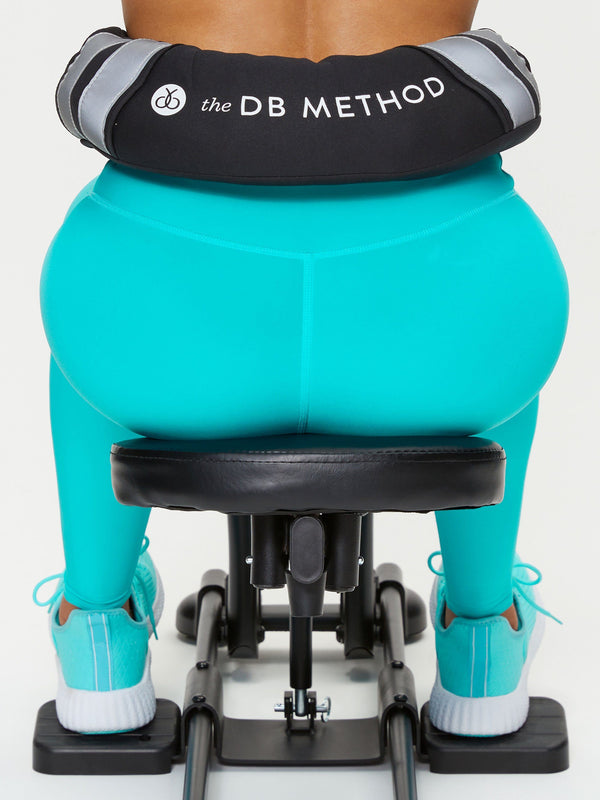
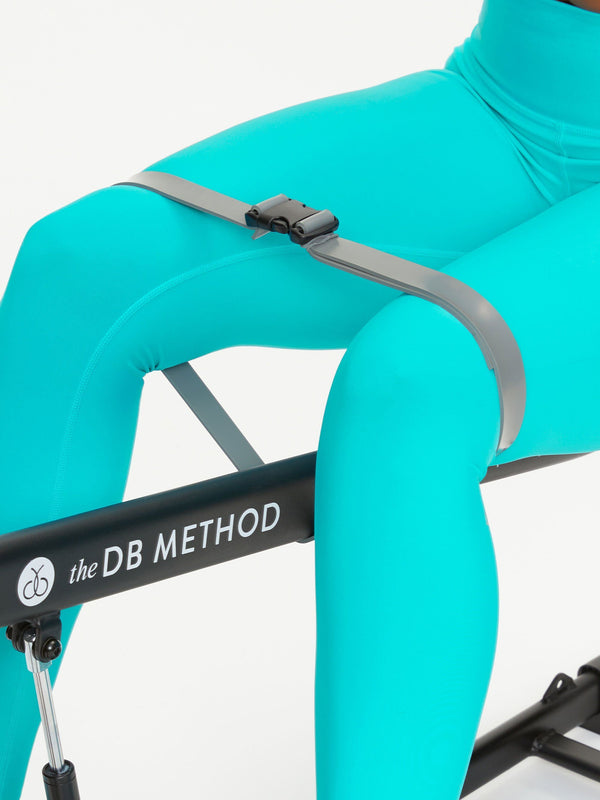
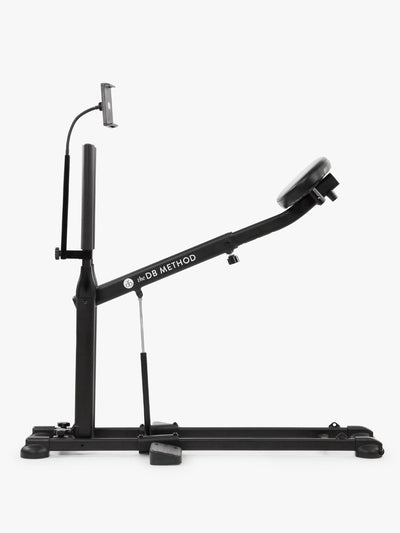
If you have The DB Method Machine, use it for your main squat block. It's low-impact, form-guided squat works glutes, quads, hamstrings, and core, then keep 2-3 accessory moves to finish this at-home leg workout.

Day 2: Hinge Day for Hamstrings and Glutes
This day balances your lower-body workout by focusing on your hamstrings and glutes. Do 2 rounds, and keep the tempo slow.
- Hip Hinge (RDL or good morning): Hands on hips, hips back, chest tall, lower on a 3-count, stand up controlled.
- Glute Bridge or Hip Thrust: Heels down, lift hips, squeeze, pause 2 seconds, lower slowly.
- Hamstring Slider (optional): Towels or socks on a smooth floor, hips up, slide out and in slowly. No sliders, repeat bridges.
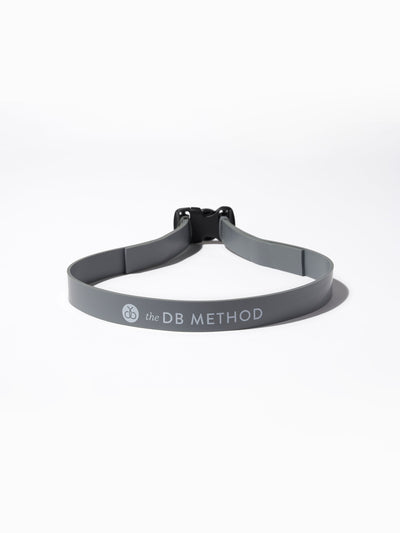
- Side-lying hip abduction or lateral steps: Lift or step side to side with control, feel the side glutes. Band optional.
Used The DB Method Machine on Day 1? Keep Day 2 floor and standing so your leg day routine stays in sync. Missed it? Finish on the machine with pulse squats or squat holds.
Day 3: Sync Day for Balance and Core
We use day 3 to clean up, balance, and control. It rounds out your lower-body workout in your weekly schedule.
- Lateral lunge (or side step and sit): Step wide, hips back, other leg straight, chest up. Push through the working foot to return.
- Supported single-leg RDL: Light hand on a wall or chair, hinge at the hips, back flat. Stop at the hamstring stretch, stand tall, and squeeze the glute.
- Step-back lunge (short range): Step back and drop a few inches, knee tracks over toes. Keep it smooth and controlled, then switch sides.
- Core brace finisher (dead bug or plank): Brace like you’re about to cough, ribs down. Keep your lower back quiet while you move or hold.
Keep this day steady, not max reps. You should finish feeling lined up, not smoked.
How to Progress Your Leg Day Routine Each Week
A good leg day routine doesn’t need constant jumps in intensity. It needs consistency. For an at-home leg workout, simple, gradual progress works best and keeps things joint-friendly. Once you can comfortably beat a rep target with solid form, that’s your cue to progress, not rush.
- Week 1: Learn the movements and lock in form. Focus on control, range, and a realistic starting rep count.
- Week 2: Add one extra set to one main move. Keep everything else the same.
- Week 3: Adjust tempo. Lower for three seconds or add a pause at the hardest point.
- Week 4: Add a light dumbbell or wrist weight, or slightly shorten rest times. Keep it modest.
The DB Method approach fits right in here with short, repeatable sessions and form support. The machine isn’t a shortcut. It’s a solid way to show up, move well, and keep progress steady.
Leg Day Mistakes That Throw Your Lower Body Off
Even a solid leg day workout at home can feel off if one area starts doing all the work. Here are the most common lower-body workout glitches and quick fixes.
Too squat-heavy, with quads running the show. That usually means you're short on hinges. A quick fix is to throw in extra RDLs, hip hinges, and glute bridges next round so the posterior chain pulls its weight, too.
If it’s all glutes and no quad support, knees and balance can start feeling weird. Keeping step-ups or lunges in the plan helps quads stay active and supports cleaner movement patterns.
And if we’re skipping the warm-up or cooldown, those cranky hips make sense. A few minutes of prep and recovery make a big difference: start with mobility, then breathe and do light stretches to finish. Not extra work. Essential.
3-4 Minute Cooldown for Better Recovery

Wrapping up a lower-body workout with a quick cooldown helps the body settle instead of staying stuck in work mode. It doesn’t have to be fancy or time-consuming, just a few minutes of moving with intention.
You start with an easy glute stretch to let the hips relax after all the effort. Then shift into a light hamstring stretch, especially helpful after hinges and lunges. Finish with a simple quad stretch to loosen up the front of the thighs, which usually do more work than you realise.
Each stretch is short and comfortable. Keeping it simple makes it easier to actually do, and that’s what helps recovery stick.
Make Your Leg Day Routine Easier with The DB Method
If a leg day workout at home often feels inconsistent or a little guessy, having a clear anchor makes all the difference. That’s where a form-guided squat pattern comes in. The DB Method Machine is a compact, low-impact system designed to train your lower body glutes, quads, hamstrings, hips, and core in short, repeatable sessions.
It slides right into your weekly workout schedule. Then just layer on a couple of accessory moves from this plan. Less overthinking, cleaner form, steady consistency without going overboard.
Want a steadier squat day? The DB Method Squat Machine keeps form clean so you can stay consistent.